The great adventure films of the 1970s and 80s understood something that a lot of modern cinema has forgotten: landscape is a character. Not backdrop, not setting, not location. Character. When you watch Werner Herzog push his cast and crew through the Amazon in Fitzcarraldo, or when the camera holds on the Wyoming plains in Heaven’s Gate a beat longer than it needs to, you’re watching filmmakers who believed the land itself had something to say and built their stories around letting it speak.
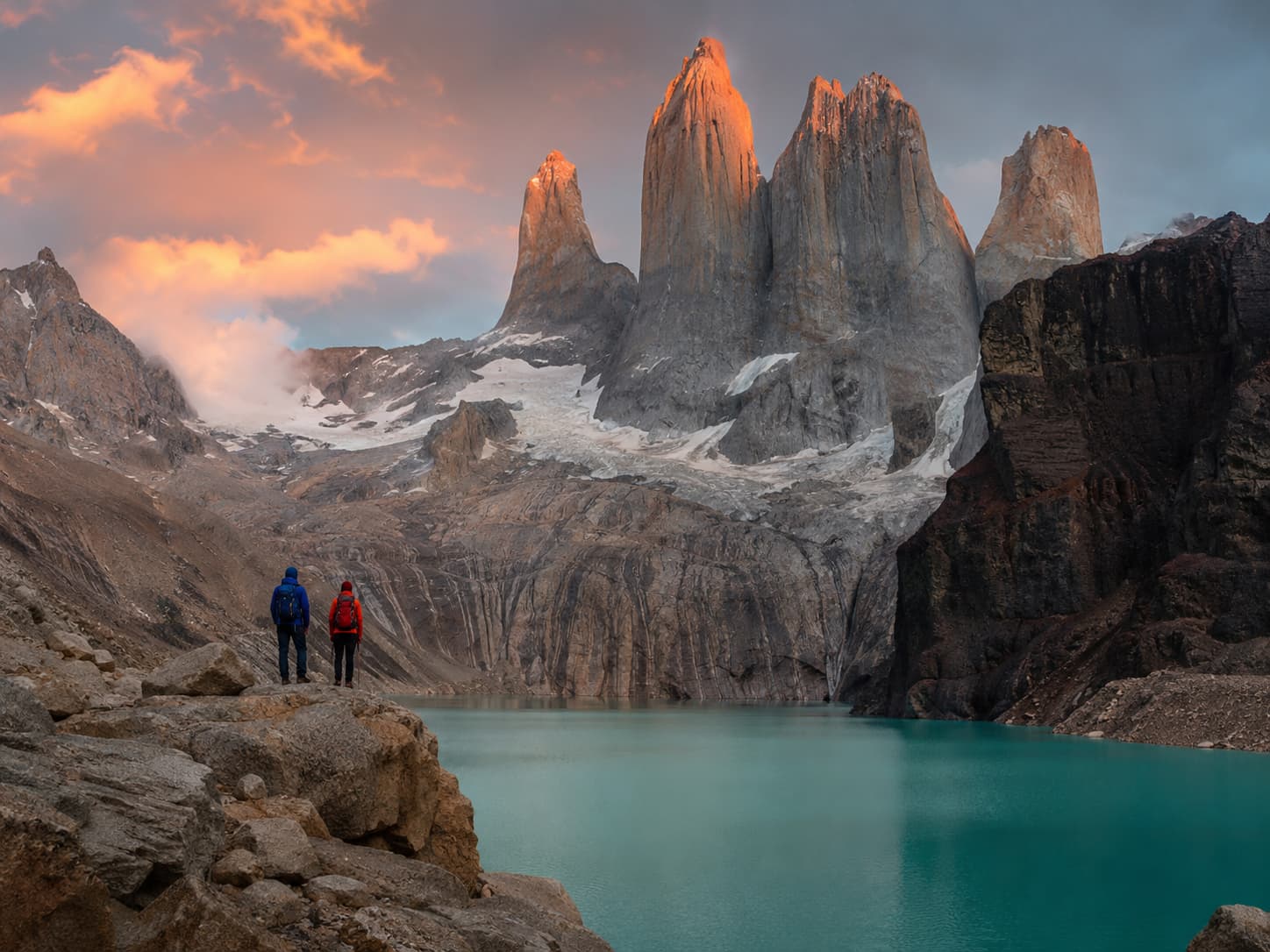
Torres del Paine, in the far south of Chilean Patagonia, is that kind of landscape. The granite towers that give the park its name rise nearly 2,800 metres from the plain in a near-vertical wall. The glaciers are blue in a way that doesn’t correspond to any blue in a standard colour reference. The wind reshapes clouds in real time. The light, at this latitude, behaves like a slow tracking shot across the terrain: moving, changing, never quite the same from one hour to the next.
For anyone shaped by the visual language of great American cinema, Torres del Paine is not just a travel destination. It’s the reference material made real. Here’s why it belongs on your list.
1. The Granite Towers Are Straight Out of a Fantasy Epic
The three towers of Paine, Los Torres, rise from the eastern edge of the massif in a formation that looks less like a natural geological event and less like something a production designer would have the budget to build. They are vertical, sheer, and slightly unreal. The rock is a dark grey granite, stained orange and rust at the upper faces where water runs over iron deposits in the stone.
Directors have been reaching for this visual language in constructed sets and CGI for decades. The towers of Mordor, the spires of countless fantasy kingdoms, the alien monoliths of 80s science fiction: all of them are trying to produce the same response that Torres del Paine generates without any assistance. Standing below them in the early morning light, you understand immediately why fantasy filmmakers keep returning to this particular visual grammar. The towers don’t look built. They look inevitable. The fantasy films that have shaped the visual imagination of multiple generations were reaching for exactly this: a landscape so extreme it feels mythological without trying.
2. Herzog Would Have Shot Here If He Could Have Reached It
Werner Herzog, whose obsession with landscapes that overwhelm human ambition produced some of the most viscerally powerful films of the 70s and 80s, described his approach to location as finding places where nature and human folly are in direct, unmediated confrontation. Torres del Paine is that place at full volume.
The wind here is not ambient weather. It’s a force with opinions. Gusts regularly exceed 100 kilometres per hour on the exposed ridgelines and can knock a loaded hiker sideways on flat ground. The glaciers are actively calving. The weather can cycle through four seasons in a single afternoon. This is not a landscape that tolerates passivity or indifference. It demands a response, and the response it tends to produce is the same one that the best dramatic films of the 70s produced in audiences: a confrontation with scale and power that leaves you recalibrated.
3. The Light Is What Cinematographers Dream About
Patagonia sits between roughly 50 and 55 degrees south latitude. At that position, the sun travels a low arc across the sky for much of the year, which means the golden hour that cinematographers fight for at temperate latitudes lasts considerably longer here. Morning and evening light at Torres del Paine can run for two hours or more, painting the towers and the surrounding peaks in the warm, directional light that makes everything look like a Vilmos Zsigmond frame.
The combination of low sun angle, clean air, and the presence of large bodies of water in the landscape, Lago Pehoé, Lago Grey, the rivers draining the glaciers, produces a quality of reflected light that has no equivalent at higher latitudes. Photographers who visit for the first time consistently report that their eyes weren’t prepared for what the light actually does here. Neither, it turns out, were their cameras.
4. The W Trek Is a Narrative Arc With Proper Structure
The most popular hiking route through Torres del Paine is called the W Trek, named for the rough shape it traces across the park over four to five days. It has a beginning, a middle, and an end. It builds. The terrain changes across the distance in ways that feel almost scripted: you move from forest to exposed ridgeline to glacier moraine to the base of the towers themselves, with each section producing a different emotional register.
Good films do this. The great dramas of the 70s understood that structure is not just organizational but emotional: the way a story is sequenced determines what the audience feels and when. The W Trek sequences its revelations the same way. You earn the towers by the time you reach them. The final morning, hiking in darkness to reach the viewpoint at sunrise, is the third-act payoff that the preceding days have been building toward. Very few travel experiences are structured that well.
5. The Wildlife Is Unlike Anything in the Northern Hemisphere
Patagonia is one of the last places on earth where large wildlife exists at a density and accessibility that feels genuinely pre-industrial. Guanacos, the wild relatives of the llama, move through the park in herds of dozens and regard human visitors with something between mild curiosity and complete indifference. The Andean condor, with a wingspan that can reach three metres, is a regular presence over the higher terrain. Pumas, though rarely seen, are present in the park in numbers significant enough that their impact on the guanaco population is actively studied.
For film audiences who grew up watching the wildlife sequences in National Geographic documentaries that played before the main feature, or the animal cinematography that Werner Herzog and others pioneered in the nature documentary form, Torres del Paine is the live version of that visual grammar. The condors banking on thermals above the towers produce a shot that no director would cut.
6. Guided Tours Make the Difference Between Seeing and Understanding
The park covers 1,800 square kilometres of terrain that includes four distinct ecological zones, three active glaciers, and geological history stretching back 12 million years. It’s navigable independently if you’re an experienced backcountry traveler. But the difference between moving through a landscape and understanding what you’re looking at is significant, and the gap is larger here than at most destinations.
Operators like Torres del Paine Tours offer guided experiences that connect the physical landscape to its geological, ecological, and human history: why the towers formed the way they did, how the glaciers are moving and what that means, what the indigenous Kawésqar people understood about this terrain long before park designation formalized it. For anyone who approaches travel the way they approach a good film, wanting to understand what they’re seeing rather than just witness it, a guided experience here pays off in ways that independent navigation doesn’t.
7. The Glaciers Are Worth Seeing While They’re Still There
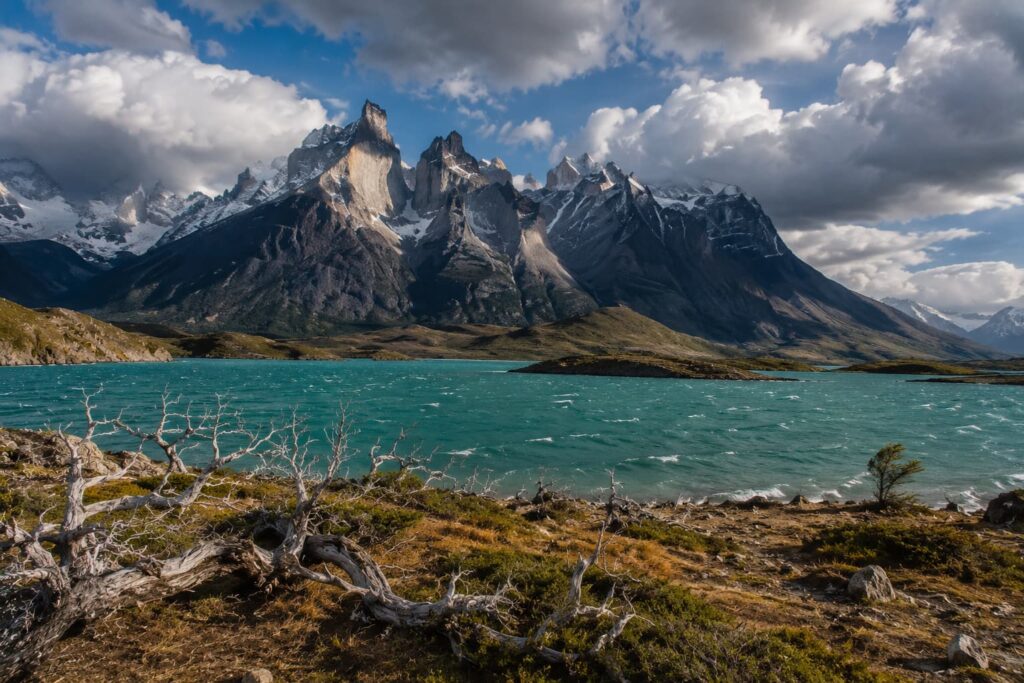
The Southern Patagonian Ice Field, which feeds the glaciers of Torres del Paine, is the third-largest freshwater ice reserve on earth after Antarctica and Greenland. The Grey Glacier, accessible from the western arm of the W Trek, extends 270 square kilometres and calves icebergs into Lago Grey that drift blue and white across the water for days after breaking free.
The ice field is retreating. The rate of glacial recession in this region has been documented by satellite imagery going back decades, and the trend line is unambiguous. What exists now is significantly less than what existed when the early adventure films of the 70s were being made, and the projections for the coming decades are sobering. Torres del Paine is one of those places where the argument for going sooner rather than later is not marketing language. It’s just the available evidence read honestly.
8. Patagonia Has the Specific Quality of Isolation That Great Westerns Understood
The American West that the great Western films of the 70s and earlier were working with was a landscape defined by its resistance to human presence. The scale dwarfed the characters. The distances were hostile. The land didn’t care whether the protagonist made it or not, and that indifference was part of the drama.
Patagonia has that quality in full. The nearest major city to Torres del Paine is Punta Arenas, about four hours south, and Punta Arenas itself is one of the most remote cities of any size on earth. The roads through the park are gravel. The weather systems move in from the Pacific without obstruction for thousands of kilometres. Getting here takes effort, and the landscape treats that effort with complete equanimity. It was here long before you arrived. It will be here after you leave. That dynamic, human ambition meeting geological indifference, is the tension that made the best Westerns and adventure films of that era worth watching. Torres del Paine runs on the same fuel.
A Final Thought
The films that hold up from the 70s and 80s tend to be the ones that understood their landscapes. They went to the actual places, put actual people in them, and let the environment do what environments do when you’re paying attention. The drama came from that confrontation.
Torres del Paine is the kind of place that makes you understand why those directors made those choices. Why you’d haul a steamship over a mountain, why you’d shoot a cavalry sequence in actual dust, why you’d hold on the horizon for three seconds longer than the editor wanted. Some landscapes demand that kind of commitment. This is one of them.
Go south. Take the time the W Trek asks for. Get up before dawn on the last morning. The towers will still be there, exactly where they’ve been for twelve million years, waiting for someone to pay proper attention.